Exploring the intimacy of Queer dreams
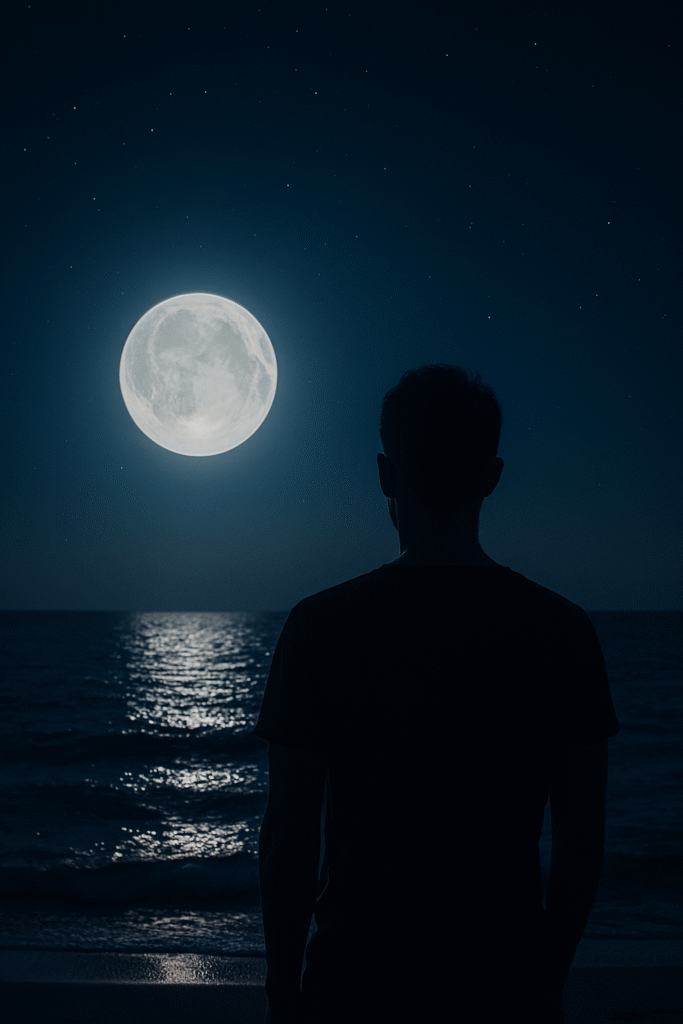
 Sometimes the evenings arrive with a hush, like velvet pressed against the skin. The world outside slows down, and inside my room I let silence become a stage. I play Sunset Calm music, soft and lingering, and bathe the walls in colored light—blue or dark red, shades that feel like secrets. My hands wander across my face and hair, tracing lines of warmth, while the rhythm of the music teaches my breath how to move. In those moments, I am not thinking. I am not planning. I am simply existing in a dream that is awake.
If someone were to walk in, they might imagine I am fantasizing about a lover, caught in some erotic reverie. But fantasizing, for me, is something else entirely. It requires a different stage, a different ritual. This is not fantasy—it is surrender. It is the body becoming a vessel for light, sound, and imagination.
Dreams, whether they arrive in sleep or in the daylight of our minds, are slippery things. They carry fragments of desire, fear, memory, and possibility. Scientists say that dreams are the brain’s way of processing emotions, stitching together pieces of our subconscious into strange, vivid tapestries. For queer people, dreams often become more than just nightly stories—they are safe spaces. They are rehearsals for identities we may not yet show the world, or explorations of desires we are still learning to name.
I remember once, lying under a crimson glow, imagining myself walking through a crowded bar in Mykonos. The music pulsed, bodies swayed, and I felt the gaze of strangers brushing against me like silk. In that dream, I was both performer and spectator, both vulnerable and powerful. It wasn’t about one person—it was about the collective energy of queer longing, the way desire can be shared without words.
Sometimes I feel anxious about speaking these dreams aloud. Whether they are sleeping visions or waking fantasies, they carry a weight of intimacy. To confess them feels dangerous, as if the audience might brand me a freak, or worse, a whore. But isn’t that the paradox of queer dreaming? We are taught to hide, yet our dreams insist on being seen. They demand color, sound, and breath.
Psychologists have found that queer people often report more vivid and emotionally charged dreams than their straight counterparts. Perhaps it is because we live with dual realities—the one we inhabit publicly, and the one we nurture privately. Dreams become bridges between those worlds. They allow us to test boundaries, to kiss who we want to kiss, to wear what we want to wear, to exist without apology.
So, when I sit alone in the evening, letting blue light wash over me, I am not escaping. I am practicing. I am rehearsing the art of being fully myself. My queer dreams are not fantasies—they are futures waiting to be lived.